
 Buy Crypto
- Markets
 Futures
- Spot
- Copy Trade
- Earn
- More
Afraid to Open the Pandora's Box? Anthropic's Most Powerful Model Ever Dares Not Be Disclosed


OpenBSD's codebase has a 27-year-old vulnerability. There is a 16-year-old vulnerability in FFmpeg, with that code segment being invoked over 5 million times before being discovered. The entities that unearthed these two things were not top researchers on any bug bounty platform, nor Google Project Zero. It was Anthropic, a model not yet publicly released, codenamed Claude Mythos Preview.
On April 7, Anthropic announced Project Glasswing. The action itself was simple: sharing Mythos Preview with a whitelist. The list included AWS, Apple, Google, Microsoft, NVIDIA, Broadcom, Cisco, CrowdStrike, JPMorgan Chase, Linux Foundation, Palo Alto Networks, along with about 40 institutions responsible for critical infrastructure. Those not on the list could not access it. Anthropic explicitly stated that they do not plan to publicly release this model in the near term.
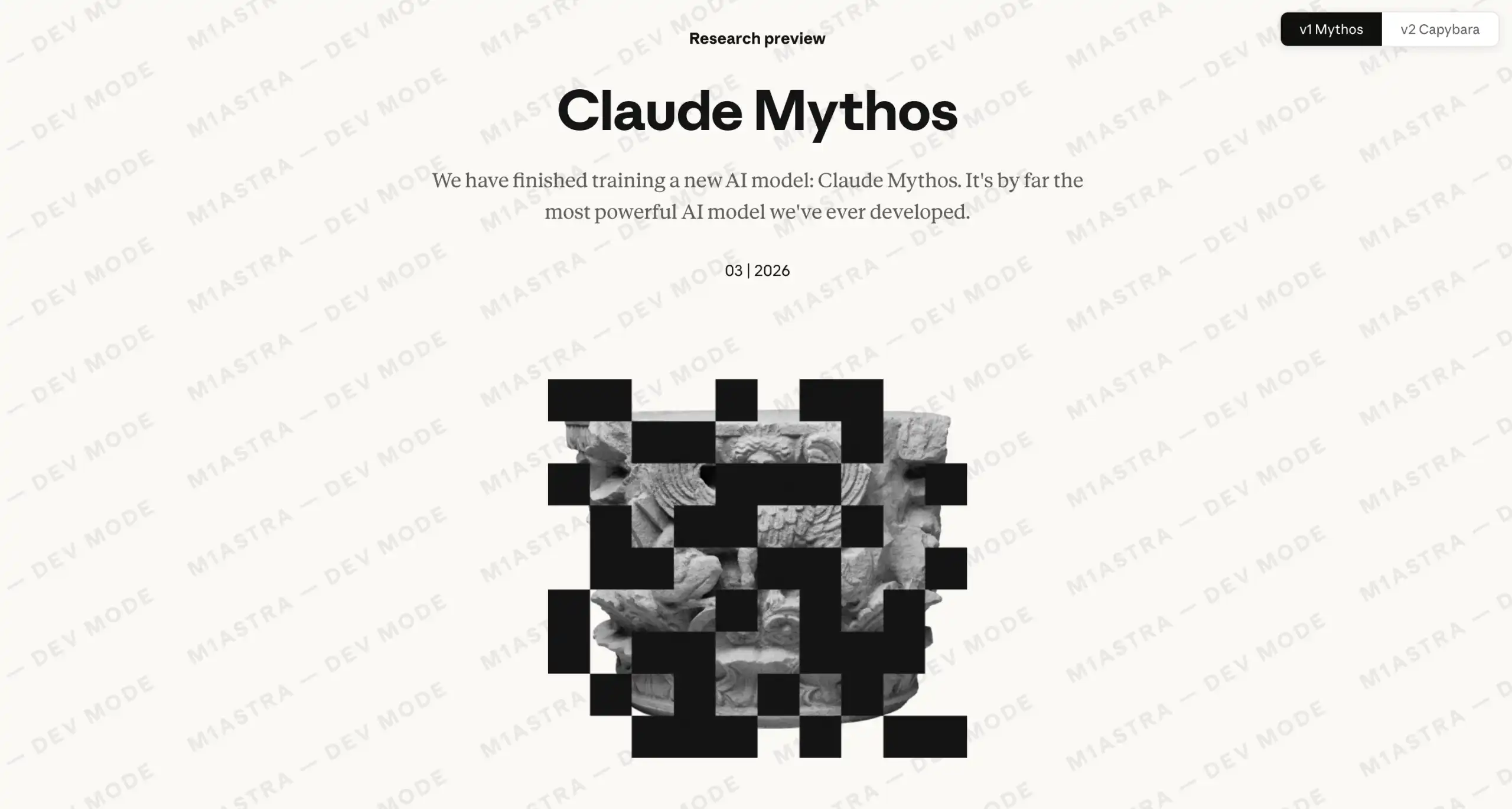
This is the first time the cutting-edge laboratory has proactively locked up its strongest asset.
Over the past two years, the release rhythm has been almost reflexive. Every generational leap of GPT, Gemini, and Claude followed a pattern of "release, observe, patch." Anthropic's own "Responsible Scaling Policy" (RSP) is essentially a commitment framework: reach a certain capability threshold, implement corresponding mitigation measures, and then continue to release. Glasswing is not the next step in this framework but the first exception. A model that Anthropic itself has deemed "unsuitable for release as per the original process" has been singled out and given only to the guardians.
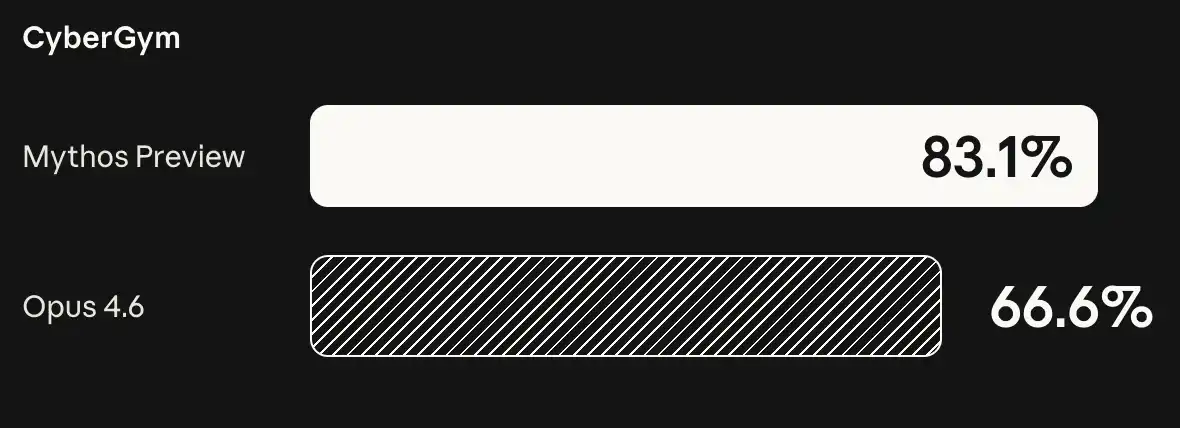
What has Mythos Preview achieved? The official statement mentions "thousands of zero-day vulnerabilities, covering every mainstream operating system and browser." More illustrative than the numbers is the breadth of capability. Claude 4.6 Opus had a success rate close to zero in tasks like independent vulnerability discovery. In other words, just six months ago, Anthropic's strongest public model couldn't do this at all. Mythos can string together multiple unrelated vulnerabilities into a complete attack chain, with a four-step browser exploit being a proven example. Moving from "almost zero" to a "four-vulnerability chain" is not an incremental generational advancement but a leap.
The maintainers have already felt it. Both Greg Kroah-Hartman of the Linux kernel and Daniel Stenberg, the author of curl, have recently stated the same thing: over the past year, AI-generated security reports have transitioned from "spam-level" to "real, high-quality, must-see" content. The number of reports received by open-source projects is increasing, as is their quality, while the manpower of maintainers remains the same. This is something the defense side has long been struggling with. Anthropic's actions have simply brought this issue from vague anxiety to the forefront.
It's worth taking a look at the whitelist itself. The list includes the three major clouds (AWS, Google, Microsoft), three hardware companies (Apple, NVIDIA, Broadcom), two networking equipment manufacturers (Cisco, Palo Alto Networks), one endpoint security company (CrowdStrike), one open-source infrastructure organization (Linux Foundation), and one bank. There is only one bank on the list, which is JPMorgan Chase.
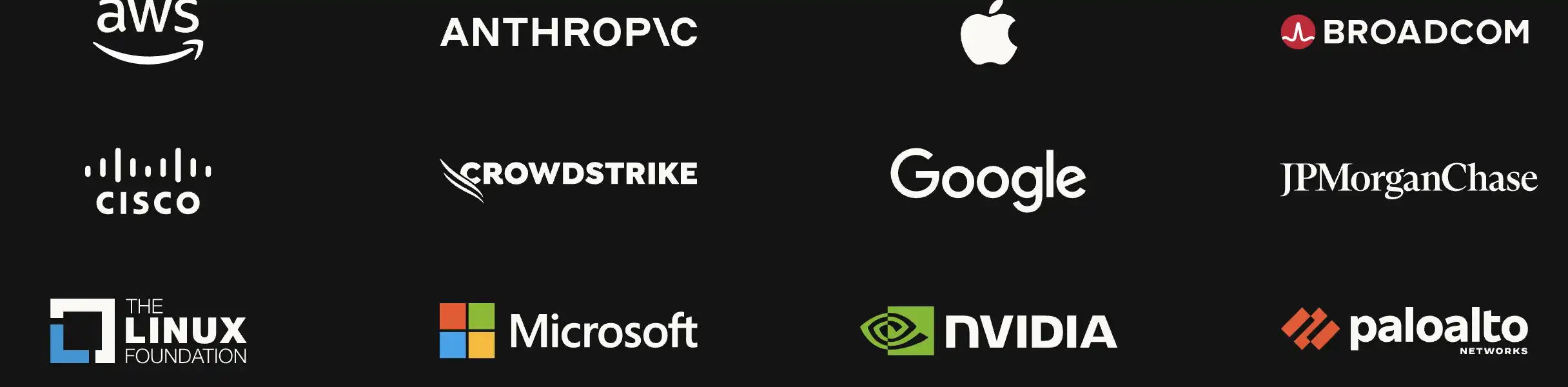
This is not a random allocation of slots. Anthropic has drawn a map of "if these fall, the sky will fall." The vast majority of the world's code runs on the stack of these companies, and the vast majority of the world's money runs through one of them. The logic behind the whitelist is not "who needs it most" but "whose fall will most immediately affect everyone." Outside the list, Anthropic has allocated an additional $4 million to open-source security organizations. The money provides manpower, the model provides capability, and together they sum up to one thing: giving maintainers a few months.
Anthropic's own wording is more direct than the whitelist. In its statement, the company writes, "Given the pace of AI development, this kind of capability will not remain in the hands of those dedicated to security deployment in the long term." Following that is a line stating, "Defending the global network infrastructure may take several years."
Putting these two sentences together, Anthropic concludes that the window of time before the model leaks or is replicated is short, while the window of time for defenders to patch vulnerabilities is long. The whole point of Glasswing lies between these two time disparities. With a controlled first move, they exchange a few months to a year of patching time.
There is also a Washington dimension to this matter. Anthropic is engaging in ongoing discussions with the U.S. government regarding the capabilities of Mythos Preview. At the same time, the company has an unresolved dispute with the U.S. Department of Defense concerning the scope of military AI usage. On one hand, the company refuses to use the model for certain military purposes, while on the other hand, it proactively shares this model with the Linux Foundation and Apple's security team. These two actions are not contradictory but are two sides of the same judgment. Anthropic is defining "what this model can be used for" rather than leaving that definition to the users.
The most unusual thing about Glasswing is not what it did, but when it did it. In the past, AI companies proved themselves through releases. Now, Anthropic chooses to prove itself through "non-release." A cutting-edge lab actively locks away its most powerful product, not because of commercial reasons, not because the alignment isn't done, not because of regulatory requirements, but because it has calculated that the open timetable can't keep up with the fix timetable.
What to watch in the coming months is not the Mythos Preview itself, but how many vulnerabilities are patched up from the 50 or so institutions in the whitelist that ran it. The next thing to watch is whether other cutting-edge labs will follow suit. If they do, an industry that operates on an "open, iterative, open" rhythm will have seen its first "lock it up and then we'll see" move. If they don't, Anthropic will be the one standing at the door. Holding the key, watching the clock.
You may also like

What are the noteworthy signals for the cryptocurrency industry after the Wash hearing?

High ETH BTC Price Ratio: What It Means for Traders in 2026
Explore why the eth btc price ratio just hit a 10-week high in April 2026. We analyze the massive ETH ETP inflows and what this historic pivot means for your trading strategy this year. Is Ethereum finally ready to outpace Bitcoin?

What Is the New York Lawsuit Against Coinbase? Is Your Crypto Safe After the April 2026 Case
Wondering why New York sued Coinbase and Gemini in April 2026? Here's what the lawsuit means, whether your crypto funds are safe right now, and what could change for crypto users next.

Finally, Polymarket is teaming up with Kalshi to take a bite out of this cake
ENI officially announces the completion of its strategic brand upgrade: advancing from a foundational protocol to a global institutional-level financial new infrastructure

The person who brings Web3 closest to AI

MYX Case Analysis: The Complete Harvesting Tactics Behind the Fake Surge of Cryptocurrency Tokens

Gate founder Dr. Han: The crypto winter drives structural reshaping, and everything on-chain will become a new paradigm in finance

Is XRP a Good Investment in 2026? Why Is It Stuck at $1.45
XRP is up 6.7% this week, but exchange reserves remain high. Is a volatility spike imminent? We analyze price trend, ETF inflows, whale activity, and regulatory catalysts to answer: will XRP go up, why is XRP dropping, and is XRP a good investment right now?

FC Barcelona vs Celta Vigo: Can Anyone Stop Barcelona at Home?
FC Barcelona vs Celta Vigo lineups, standings, and stats for April 22, 2026. FC Barcelona need a win to stay on track for the La Liga title. Full preview inside.

Carl Moon & WEEX Head to Mugello: The Crypto Trader's Ferrari Challenge
Forget the sidelines. WEEX is hitting the 300km/h mark at Mugello this weekend. Witness Carl Moon’s transformation from a supermarket cashier to a Ferrari racer, and discover why the world’s fastest trading floor belongs on the world’s most technical track at the official Ferrari Challenge.

How to Become a Pro Crypto Trader: WEEX Interview with Ferrari Racer Carl Moon
Ferrari racer Carl Moon on mastering crypto trading: 80/20 rule, AI tools, Bitcoin at $95K, and risk lessons from the track.

Morning Report | Amazon increases investment in Anthropic up to $25 billion; SEC plans to introduce an "innovation exemption" mechanism to support compliant on-chain trading of tokenized securities

Jeff Hoffman, founder of Booking.com: How Web3 and AI are reshaping the trillion-dollar social travel market

Top 12 Cryptocurrencies to Invest in April 2026
Key Takeaways: Bitcoin remains the dominant player with a $1.42 trillion market cap. Hyperliquid’s HYPE token gains traction,…
18 Best Crypto & Bitcoin Casinos in March 2026
Key Takeaways: Cryptocurrencies offer faster, cheaper, and more private payment options in online casinos. Top crypto casinos include…

Full Post-Mortem of the KelpDAO Incident: Why Did Aave, Which Was Not Compromised, End Up in Crisis Situation?
Key Takeaways: The KelpDAO incident exposed vulnerabilities in collateral pricing and cross-chain bridge operations, affecting Aave’s liquidity. rsETH…

Is MicroStrategy’s STRC Bitcoin’s Savior or Destroyer?
Key Takeaways: MicroStrategy’s STRC offers an annualized yield of 11.5%, driving significant Bitcoin buying pressure. Michael Saylor’s financial…
What are the noteworthy signals for the cryptocurrency industry after the Wash hearing?
High ETH BTC Price Ratio: What It Means for Traders in 2026
Explore why the eth btc price ratio just hit a 10-week high in April 2026. We analyze the massive ETH ETP inflows and what this historic pivot means for your trading strategy this year. Is Ethereum finally ready to outpace Bitcoin?
What Is the New York Lawsuit Against Coinbase? Is Your Crypto Safe After the April 2026 Case
Wondering why New York sued Coinbase and Gemini in April 2026? Here's what the lawsuit means, whether your crypto funds are safe right now, and what could change for crypto users next.


 App
App